
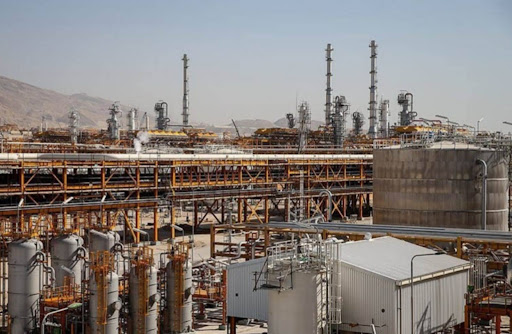
Iran’s retaliatory threat left the Gulf energy sector dangerously exposed on Wednesday after Israeli forces struck the South Pars gasfield — the world’s largest natural gas reserve. The Revolutionary Guards named specific facilities in Saudi Arabia, the UAE, and Qatar as imminent targets and ordered immediate evacuation. Oil prices climbed sharply toward $110 a barrel as the exposure of Gulf energy infrastructure to potential strikes alarmed markets and governments.
South Pars, jointly operated between Iran and Qatar, has been the backbone of Iran’s energy export revenues throughout the conflict. The Israeli strike — reportedly conducted with US consent — was the first direct attack on Iran’s fossil fuel sector. Washington and Tel Aviv had previously avoided this move, but the decision to cross this line provoked Iran’s most specific and credible retaliatory threat of the entire war.
Threatened facilities included Saudi Arabia’s Samref refinery and Jubail complex, the UAE’s al-Hosn gasfield, and Qatar’s Mesaieed and Ras Laffan installations. Iran’s state media issued public evacuation orders alongside the target list. Governor Eskandar Pasalar of Asaluyeh said the US-Israeli strike was “political suicide” and declared the war had entered a full-scale economic phase.
Brent crude rose nearly 5% to $108.60 per barrel, while European gas benchmarks climbed more than 7.5%. Gulf oil exports had already been cut by 60% from pre-war volumes due to infrastructure damage and Iran’s blockade of the Strait of Hormuz. Iran had continued to ship its own crude through the strait while blocking Gulf neighbors’ exports — a strategic imbalance that had given Tehran significant economic leverage. Any successful Iranian strikes on Gulf energy facilities would compound what was already a devastating global supply shortage.
Qatar’s government spokesperson warned that attacking energy infrastructure threatened global energy security and the welfare of millions. The exposure of the Gulf energy sector to Iran’s retaliatory threat was a development that energy analysts had long feared and policymakers had worked to prevent. As Iran’s retaliatory window opened and specific targets were named, that feared scenario was now playing out in real time.