
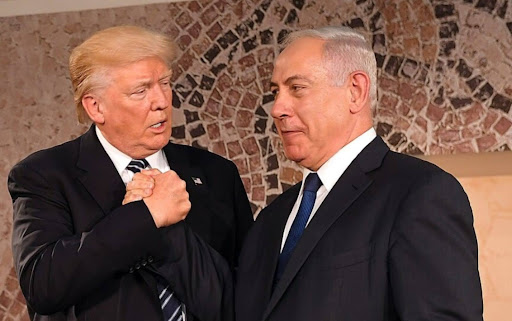
The statement was brief, but it carried considerable weight. When Director of National Intelligence Tulsi Gabbard told the House Intelligence Committee that the objectives laid out by President Donald Trump and Israeli Prime Minister Benjamin Netanyahu are different, she was providing official confirmation of what analysts, observers, and regional partners had been saying for weeks: the US-Israel campaign against Iran is not a single, unified war with a single, unified objective. It is two overlapping but distinct campaigns, conducted in the same theater, by allies with different endgames.
Gabbard’s testimony came in the midst of the South Pars fallout — a moment when the divergence was already visible and the official messaging of alliance unity was under strain. Her candor in that context was notable. Senior officials typically work to paper over alliance differences; acknowledging them on the congressional record is unusual. The fact that she did so suggests either that the divergence was too obvious to deny convincingly, or that a degree of official transparency about it was judged useful.
The substance of what she confirmed is significant for how the conflict is understood. Trump has consistently defined his objective as nuclear containment — stopping Iran from acquiring a bomb. Netanyahu has consistently framed his objective as regional transformation — changing Iran’s government and reshaping the Middle East. These are not the same war, and Gabbard said so on the record. The official denial of the divergence was no longer tenable after her testimony.
For Iran, the testimony provided useful intelligence about the limits of US-Israel alignment. For Gulf states, it confirmed concerns they had already been expressing. For domestic American audiences, it provided an honest assessment from the intelligence community that the conflict is being conducted with less internal coherence than official statements had suggested.
Gabbard’s testimony may ultimately be remembered as one of the defining moments of transparency in the conflict — a point at which the official narrative caught up with the observable reality. Whether that transparency leads to better management of the divergence, or simply makes the divergence more difficult to paper over, will be determined by what both governments do next.